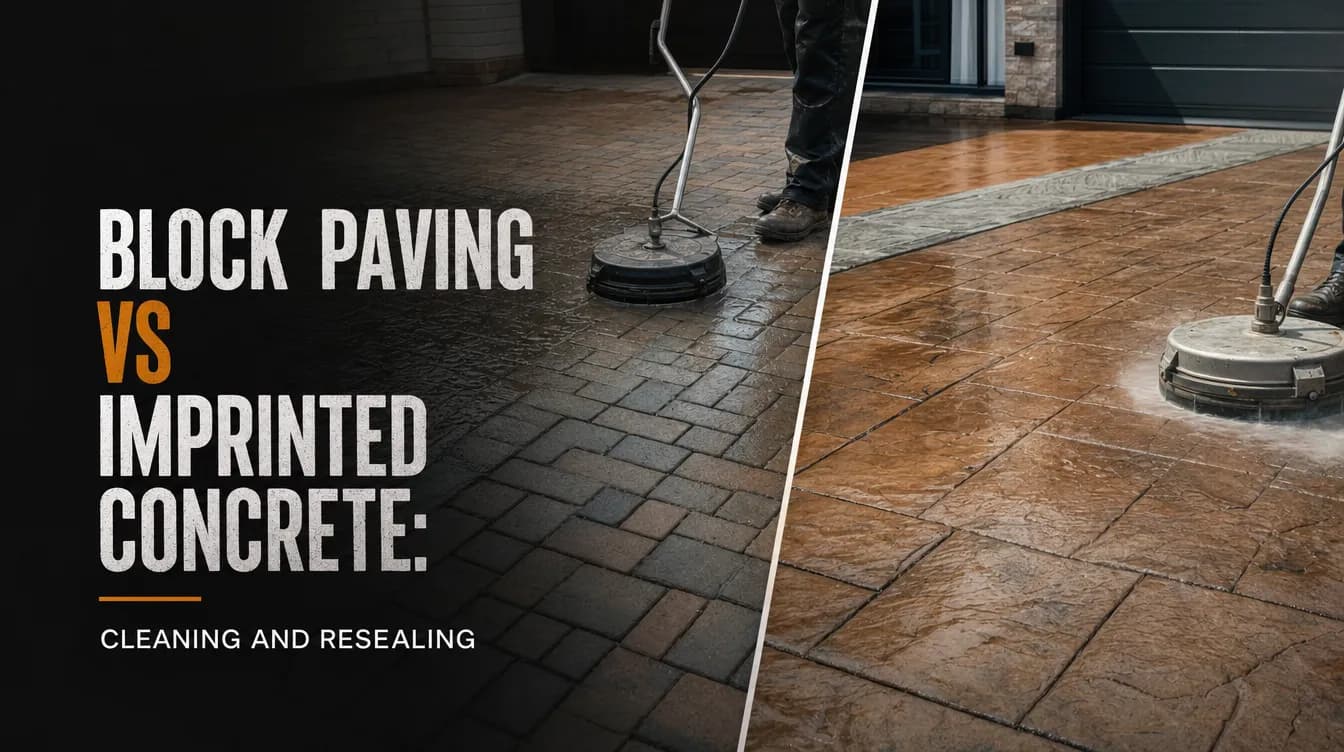
Block paving vs imprinted concrete comes down to one thing when it is time to clean: joints. Block paving is hundreds of separate blocks with sand between them, so the work is in the joints: growth out, sand back in, then an optional seal to hold it. Imprinted concrete is one slab stamped to look like blocks, with its colour in the top layer, so the work is in the surface and the seal matters far more.
Both come up well. They just come up for different reasons, and treating one like the other is how drives get spoiled.
How can you tell block paving from imprinted concrete?
Plenty of people are not sure which they have, and from a few steps back the two can look alike. Get close and it is easy.
- Look in the gaps. Block paving has real gaps between the blocks, filled with sand, and after a few years with weeds. Imprinted concrete has only a shallow pressed groove, with no sand in it.
- Look for straight cut lines. Imprinted concrete is laid as one slab and has to be cut so it can move without cracking, so it has long straight lines running right across the pattern every few metres. Block paving has none.
- Look at a chipped edge. A block is the same colour the whole way through. Imprinted concrete that has chipped shows plain grey concrete under the colour.
- Feel for a rocking block. Only block paving can have one. A slab either sits solid or has cracked.
How is block paving cleaned and resealed?
The wash is the quick part. Because the colour runs through the block, getting the dirt and algae off brings back the colour it was laid in. The joints are the real job.
The sand between the blocks is doing work. It locks each block against its neighbours so the drive stays tight and flat under a car. Over the years it fills with soil and weed roots, and a proper wash takes a good part of it out along with the growth. So the joints are cleared, then new sand is brushed back in. On a Rotherham drive in May 2022 the customer's own summary of the job was cleaned, resanded and sealed, and that order is the right one.
The seal on block paving is optional. What it does is bind the top of that fresh sand so it does not wash or blow straight back out, make it harder for seeds to settle in the joints, and make the next clean easier. It goes on only once the drive is dry, which is why it usually follows on a later day.
How is imprinted concrete cleaned and resealed?
With imprinted concrete there are no joints to clear, apart from the cut lines. What there is instead is a coloured top layer and, over it, a seal that was put on when the drive was laid. That seal is what keeps the colour from fading and the surface from soaking up dirt, and after a number of years it wears thin.
So the cleaning is gentler and the finishing is where the difference shows. The surface is washed, and where the colour has faded off, it can be put back before the new seal goes on. Colour is a step of its own: a customer in Huddersfield booked a clean, paint and reseal in June 2025, for the driveway, the side of the house and the patio at the back.
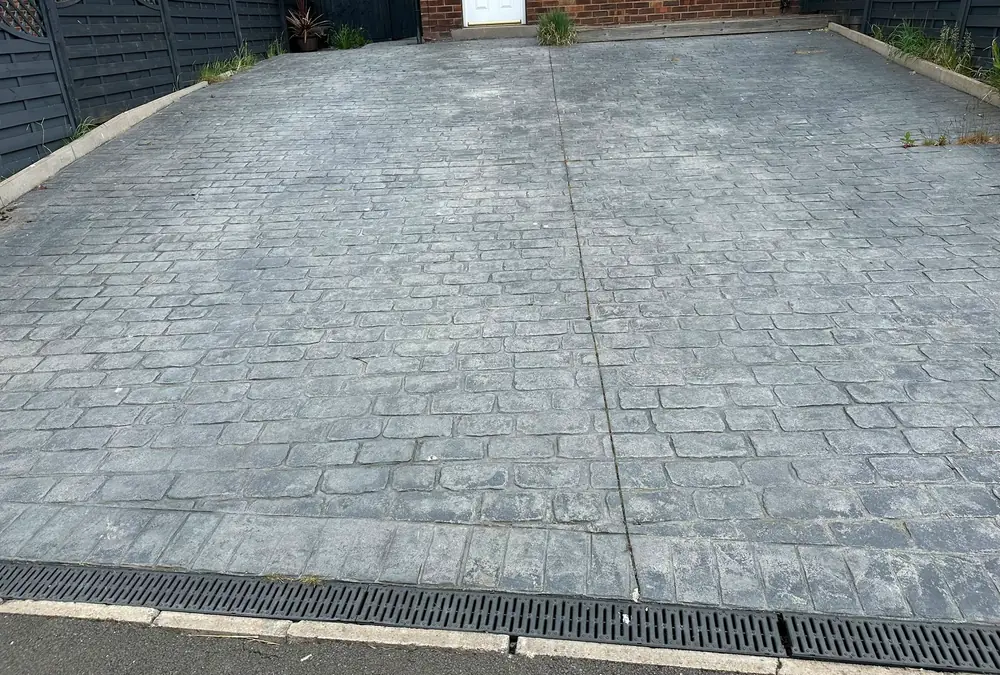
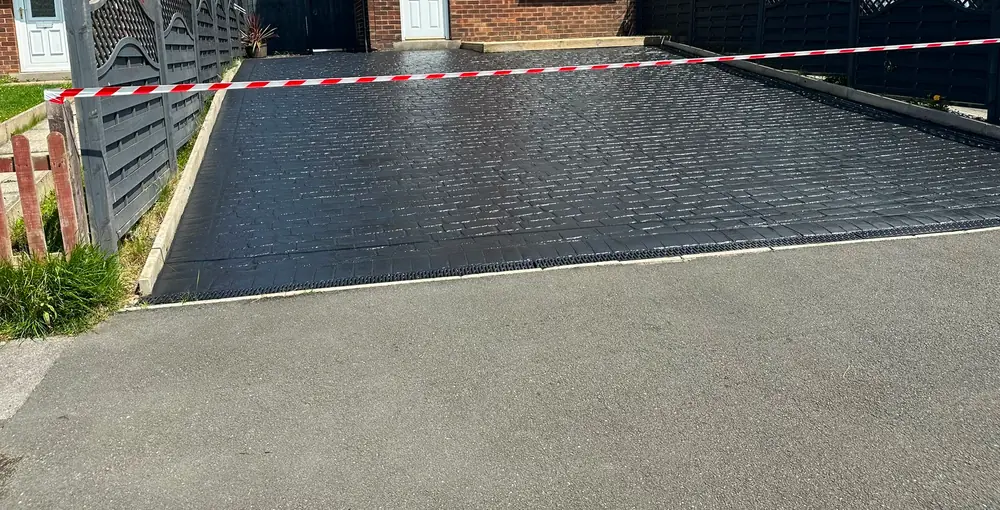
The pair below is an imprinted drive I did. The first shows the flat grey these go as they fade, and you can see the straight cut line running down the middle of it. The second is the same drive after, taped off while it dried.
Block paving vs imprinted concrete: which needs sealing more?
Imprinted concrete, by a distance. Its surface was designed to live under a seal, and once that has worn through, the colour fades and dirt goes into the surface rather than sitting on it. Resealing is part of owning one.
Block paving can go without. A block drive can be washed, re-sanded and left, and be fine. A seal is worth it on a drive that greens up quickly or where the sand keeps disappearing, but it is a choice rather than a must.
With either, the surface has to be sound and dry before anything goes on it. A seal holds whatever is underneath it, good or bad.
What goes wrong when it is done badly?
On block paving, the common mistake is a wash that empties the joints and leaves them empty. It looks sharp for a week. Then the blocks have room to shift, the edges start to move, and every seed that lands has a bare, damp gap to grow in.
On imprinted concrete, it is going at the surface too hard and taking colour with the dirt, or putting a new seal over a damp slab. If the finish is not right underneath, a new coat does not fix it.
What decides the cost?
I do not have a price list for drives, because two drives the same size can be very different jobs. Block paving carries the extra time and material of re-sanding the joints. Imprinted concrete may need its colour put back before sealing, and that is a step of its own. After that it is how long since the drive was last done, how much growth is in it, how easy it is to get water to it and the dirty water away, and whether you want it sealed. Sealing needs a dry drive and a dry forecast, so the finish often comes on a different day to the wash.
When to ring someone
If your block paving has weeds in every joint or your imprinted drive has gone flat and grey, it is past a quick rinse. Both are covered on the driveways and patios page. If the gutters above the drive want doing as well, gutter clearing is easy to book alongside it.
Drives from Mexborough out to twenty miles, Rotherham and Barnsley included, with more finished drives on my work page.
Stand at the end of the drive, take one photo of the whole thing and one close up of the surface, and WhatsApp both to 07515 154559. The close-up tells me which kind it is. The quote is free, and coming out to look costs nothing.